Automated Video Content Creation and Publishing Workflow
This project automated the entire video content creation and publishing process by leveraging an n8n workflow.
Client
Framify
Service
N8N Automation
Tools
OpenAI, multimedia APIs, Google Drive, Sheets, YouTube, and n8n.
Timeline
7 Days
Website
n8n.io


Project Goals
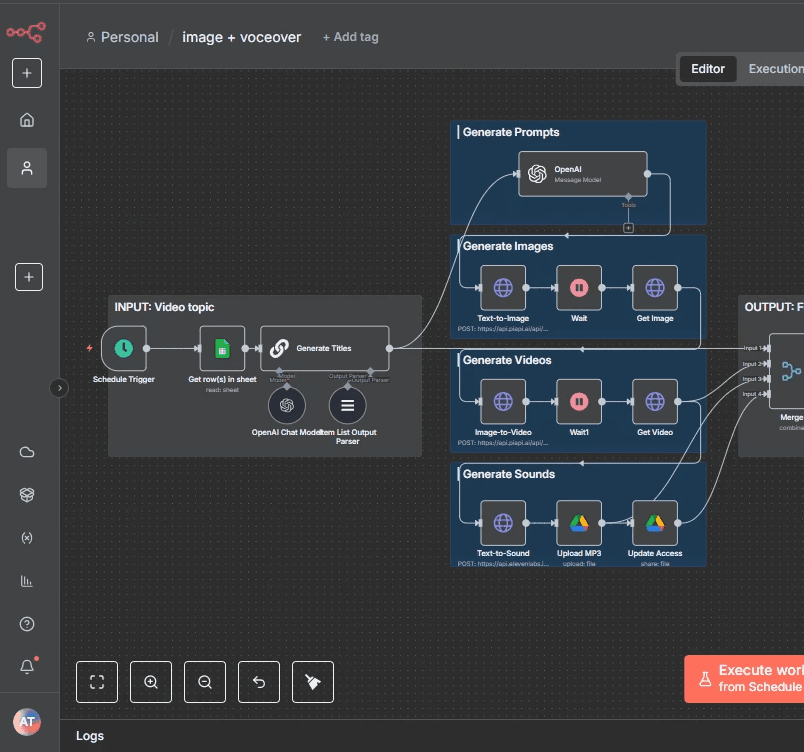
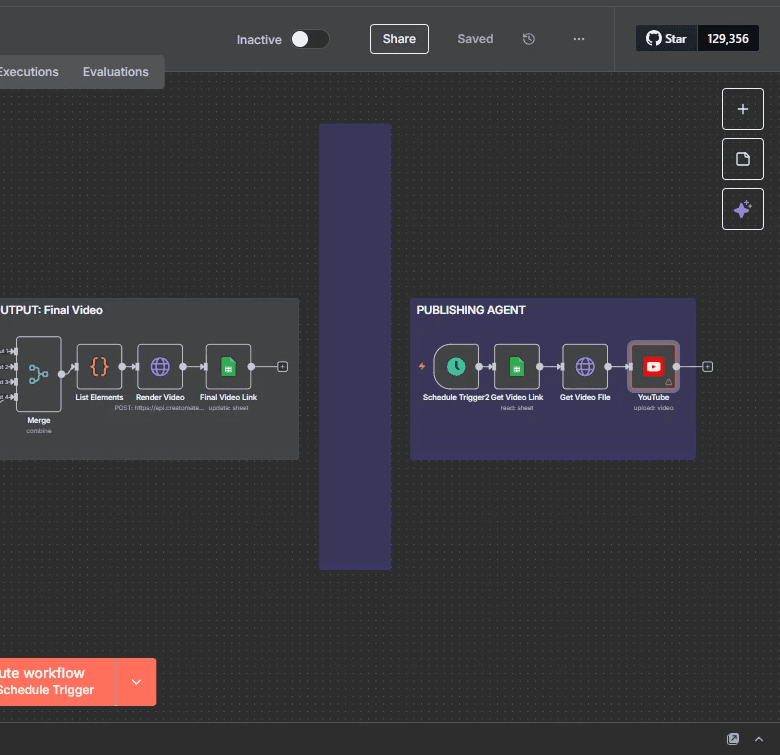
This project automated the entire video content creation and publishing process by leveraging an n8n workflow. Starting with a scheduled trigger and a video topic as input, the system automatically generated video titles, created image and video assets, produced voiceovers, and merged all content into a final video. The completed video was then uploaded and published on YouTube. This automation drastically reduced manual effort in video production and publishing, streamlining content creation for consistent and efficient output.
Challenges & Problems
Previously, the video creation process required multiple manual steps including brainstorming video topics and titles, generating images and videos, producing voiceovers, editing, and finally uploading videos to YouTube. This multi-step manual process was time-consuming, prone to errors, and limited scalability for producing frequent videos.
Solutions Provided
An n8n workflow was implemented with multiple modular components. The workflow starts with a scheduled trigger, which fetches video topics from a sheet. OpenAI generates creative video titles from the input topic. Separate branches automatically generate images (text-to-image), videos (image-to-video), and sounds (text-to-sound with MP3 upload and access update). These elements are combined and rendered into a final video. The video metadata and link are updated in a sheet, and another scheduled publishing agent node triggers the automated upload and publishing of the video to YouTube.
The Result
Demo Here
The automation reduced manual video production steps to a single scheduled workflow execution. Video content creation from topic ideation to YouTube publishing is now fully automated, saving significant time and effort. This results in faster content output with decreased human intervention and consistent publishing schedules, enabling scalable video production.